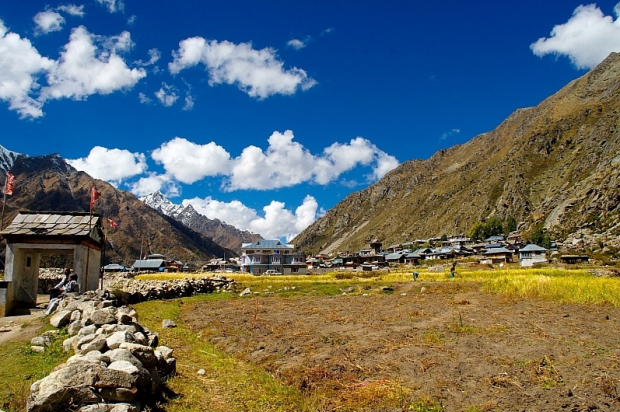
Kye Gompa (also spelled Ki, Key or Kee) is a Tibetan Buddhist monastery located on top of a hill at an altitude of 4,166 meters (13,668 ft) above sea level, close to the Spiti River, in the Spiti Valley of Himachal Pradesh, Lahaul and Spiti district.
It is the biggest monastery of Spiti Valley and a religious training center for Lamas. It reportedly had 100 monks in 1855. Founded by Dromton, a famous disciple of teacher Atisha in the 11th century, the monastery used to house about 350 lamas at one time. The number of inmates at the monastery has come down.
The monastery is famous for its architecture called Pasada style. The monastery is spread over three floors – underground, ground and first floor. Underground is mainly utilized for storage; ground floor is used as assembly hall, called Du-Khang. The ground floor also has small rooms for monks.
The monastery is known for its ancient murals, rare thangkas and ancient weapons.
The scenic landscape which forms the backdrop for Key Monastery is also a factor in the large number of tourists making a beeline for the remote monastery. Surrounded by snow capped mountains and glaciers, the beauty of the valley is breathtaking
There are no restaurants at the Key Monastery.The monks at the monastery serve tea to all visitors. Best time for visiting Key Monastery is during summer, from May to October. From October end, Rohtang Pass remains closed due to snow fall.


It is the biggest monastery of Spiti Valley and a religious training center for Lamas. It reportedly had 100 monks in 1855. Founded by Dromton, a famous disciple of teacher Atisha in the 11th century, the monastery used to house about 350 lamas at one time. The number of inmates at the monastery has come down.
The monastery is famous for its architecture called Pasada style. The monastery is spread over three floors – underground, ground and first floor. Underground is mainly utilized for storage; ground floor is used as assembly hall, called Du-Khang. The ground floor also has small rooms for monks.
The monastery is known for its ancient murals, rare thangkas and ancient weapons.
The scenic landscape which forms the backdrop for Key Monastery is also a factor in the large number of tourists making a beeline for the remote monastery. Surrounded by snow capped mountains and glaciers, the beauty of the valley is breathtaking
There are no restaurants at the Key Monastery.The monks at the monastery serve tea to all visitors. Best time for visiting Key Monastery is during summer, from May to October. From October end, Rohtang Pass remains closed due to snow fall.